Most people use disposable bed pads without ever thinking about what’s actually happening beneath the surface. But understanding the construction — the layers that make up a bed pad and what each one does — makes it much easier to judge quality, choose the right product, and know what you’re actually paying for when comparing options.
What Are Disposable Bed Pads?
Disposable bed pads are single-use absorbent sheets placed on top of a mattress, chair, or other surface to protect against moisture and leaks. They’re widely used in home care, care homes, and hospital settings, and are built specifically to manage liquid quickly while keeping the surface underneath completely dry. TBM Trading’s 60x60cm and 60x90cm packs are built around the same core construction principles covered below, just at different sizes for different coverage needs.
What Is Inside a Disposable Bed Pad?
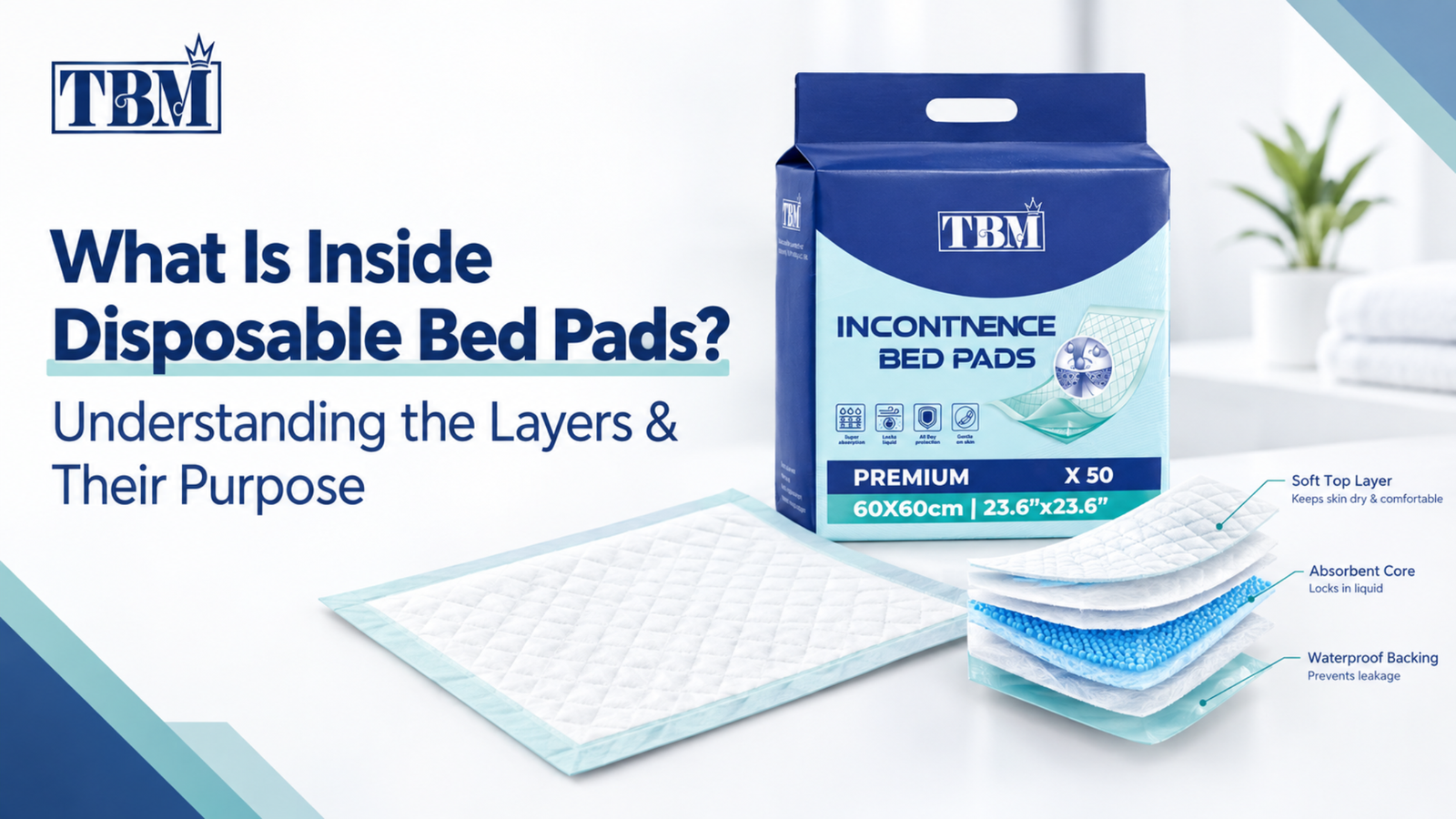
Disposable bed pads are generally made with several layers that work together to manage moisture. These commonly include a soft top layer, an absorbent core, and a waterproof backing designed to help prevent moisture from reaching the mattress or furniture underneath.
Soft Top Layer
This is the layer that makes direct contact with the skin or surface being protected. It’s typically a soft, non-woven fabric designed to feel comfortable while allowing liquid to pass through quickly to the layer beneath, rather than letting it sit on the surface. A slow-draining top layer is one of the most common causes of discomfort and skin irritation, so this layer’s speed matters as much as its softness.
Absorbent Core
Sitting beneath the top layer, the absorbent core is where most of the pad’s function actually happens. It’s usually made from a combination of cellulose fibres and a super-absorbent polymer (SAP), which locks liquid away and converts it into a gel-like form rather than letting it move back toward the surface. This is what prevents “re-wetting,” where liquid resurfaces after initial absorption — a common problem with lower-quality pads that use cellulose alone without SAP.
Waterproof Backing
The final layer is a waterproof barrier, typically a thin plastic or polyethylene film, that stops any liquid from passing through to the mattress, chair, or furniture beneath. This layer is what allows a bed pad to be used confidently on beds without an additional mattress protector, though many people still layer the two for extra protection — a combination we cover in our guide on protecting your mattress from incontinence leaks.
How Each Layer Works Together
The three layers function as a system, not independently. Liquid needs to move quickly through the top layer, get absorbed and locked away by the core, and be fully contained by the backing — if any single layer underperforms, the whole pad’s effectiveness drops. This is why absorbency claims on packaging should be considered alongside the full construction, not judged on the core material alone. According to the NHS guidance on managing incontinence, effective absorbent products are an important part of preventing skin irritation and maintaining hygiene in long-term incontinence care.
Disposable vs. Reusable Bed Protection
Reusable, washable bed pads use a similar top-layer-and-backing concept but typically rely on absorbent fabric rather than a SAP core, meaning they generally hold less liquid before needing to be changed or washed. Disposable pads offer more consistent absorbency since each one is used only once at full capacity, while reusable options can be more cost-effective for lighter, less frequent use. We’ve compared the two in detail in our guide to reusable vs disposable bed pads, including a full cost and hygiene breakdown.
Choosing the Right Disposable Bed Pad
When comparing bed pads, look beyond the pack price and check:
- Core material — SAP-based cores outperform cellulose-only cores for absorbency and re-wetting prevention
- Backing quality — a fully sealed, leak-proof backing is essential for genuine protection
- Size — matched to the coverage area needed, whether that’s a chair, wheelchair, or full bed; our bed pad size guide breaks this down further
- Consistency across batches — a reliable supplier should deliver the same quality pad every time you order
Frequently Asked Questions
What material is inside a disposable bed pad? Disposable bed pads typically contain three layers: a soft non-woven top layer, an absorbent core made from cellulose fibres and super-absorbent polymer (SAP), and a waterproof plastic or polyethylene backing.
Are disposable bed pads waterproof? Yes, quality disposable bed pads include a waterproof backing layer specifically designed to prevent moisture from passing through to the mattress or surface underneath, while the top layers manage absorption.
How do disposable bed pads absorb liquid? Liquid passes through the soft top layer into the absorbent core, where super-absorbent polymer locks it into a gel-like form. This prevents the liquid from moving back toward the surface, a process known as re-wetting.
How many layers are in a disposable bed pad? Most disposable bed pads have three primary layers: the top layer for comfort and quick liquid transfer, the absorbent core for locking away moisture, and the waterproof backing for full leak protection.
Final Thoughts
Understanding what’s actually inside a disposable bed pad makes it much easier to evaluate quality and value when comparing products — the core material and backing quality matter far more than pack price alone. Browse TBM Trading’s full range of disposable bed pads, built with a genuine multi-layer absorbent core, with free UK delivery. Shop online for trusted health care essentials, or get in touch if you have questions about which product suits your needs.