Managing incontinence effectively is one of the most operationally critical challenges facing UK care homes today. From staffing pressures to resident dignity, every procurement decision matters, and few supplies are as central to daily care as incontinence bed pads for care homes UK. Whether you run a single residential unit or a multi-site nursing home group, getting the right product at the right price, delivered reliably, is non-negotiable.
In this guide, we cover everything procurement managers and care home operators need to know: what to look for in quality bed pads, how to manage bulk orders efficiently, where trade pricing genuinely makes a difference, and why supplier reliability can make or break your care delivery in 2026.
Quick Questions & Answers
| Q: What are incontinence bed pads for care homes UK and why are they essential?
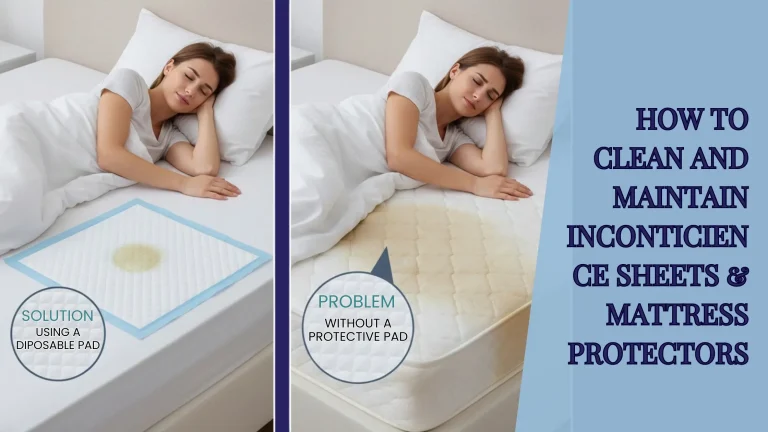
A: Incontinence bed pads for care homes UK are absorbent, disposable sheets placed under residents during sleep or rest to protect mattresses and bedding. They are essential in professional care settings because they protect resident skin, reduce laundry costs, and maintain hygiene standards, used multiple times daily across every bed. |
| Q: How often should incontinence bed pads be changed in a care home?
A: Best practice recommends changing bed pads whenever they are soiled, at minimum once per shift. For residents with heavy overnight incontinence, high-absorbency pads (1500ml+) can last through the night, but should still be replaced at the morning care round. |
| Q: What is the most cost-effective way to buy incontinence bed pads for care homes UK?
A: Buying in bulk trade packs of 50 or 100 units from a dedicated wholesale supplier is significantly cheaper than retail. Establishing a standing order account further reduces per-unit cost and removes the administrative overhead of repeated purchasing. |
Why Incontinence Bed Pads Are a Core Procurement Priority
Incontinence affects a significant proportion of care home residents. NHS data indicates that over 50% of elderly residents in long-term care settings experience some form of urinary incontinence. That means incontinence bed pads for care homes UK are not an occasional purchase, they are a daily operational necessity used across every bed, every night, often multiple times per shift.
Products must meet a specific performance standard that ordinary retail pads simply do not match. High absorbency, a secure non-slip base, a soft top layer that protects skin, and structural integrity throughout the night are all baseline requirements when sourcing at scale.
Key Features to Prioritise When Buying in Bulk
- Absorbency rating: Look for pads rated at least 1500ml capacity for overnight use.
- Size options: 60x60cm suits standard beds; 60x90cm provides greater coverage for larger residents or restless sleepers.
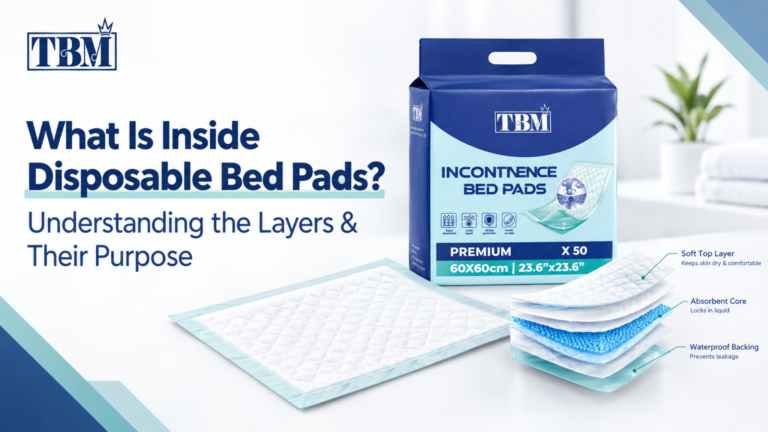
- Superabsorbent polymer (SAP) core: Converts liquid to gel, preventing backflow and surface moisture.
- Non-slip backing: Prevents shifting on mattress surfaces during the night.
- Soft fleeced top sheet: Reduces skin contact with moisture, minimising pressure sore risk.
When evaluating incontinence bed pads for care homes UK, always request product data sheets and test packs before committing to large orders. Reputable trade suppliers will provide trial quantities as standard.
Bulk Pricing: What Good Trade Pricing Looks Like in 2026
Retail pricing is simply not viable at care home volumes. A 40-bed home may use 80–160 pads per day across day and night shifts. At retail prices of £0.30–0.50 per pad, that’s up to £2,400 per month on bed pads alone.
Trade pricing for incontinence bed pads for care homes UK drops per-unit costs significantly when ordering in packs of 50 or 100, and further still with monthly standing orders. TBM Trading offers packs of 50 (60x60cm) from £9.99 and packs of 100 (60x90cm) from £20.00, with free UK delivery, a material saving compared to retail or high-street platforms.
Explore the full range at TBM Trading’s Incontinence Shop, designed specifically for trade and bulk buyers.
Supplier Reliability: The Factor Most Overlooked in Care Procurement
Price matters, but supply chain reliability is what actually determines care outcomes. A late delivery of incontinence bed pads for care homes UK doesn’t just create an admin problem, it directly affects resident welfare, staff workload, and CQC compliance readiness.
Key reliability indicators to assess in any supplier: same-day dispatch for orders before 3pm, clear stock availability, consistent quality batch-to-batch, and responsive customer support.
TBM Trading dispatches all UK orders placed before 3pm the same working day, with next-day delivery as standard. This makes it a dependable partner for homes operating on tight daily logistics.
VAT Relief: Are Your Purchases Eligible?
Under UK law, individuals who are chronically sick or disabled can purchase qualifying incontinence products VAT-free under Group 12 of the Value Added Tax Act 1994. For institutional buyers such as care homes, confirming eligibility before placing large standing orders can result in substantial annual savings, the standard UK VAT rate is 20%.
TBM Trading clearly marks VAT-exempt products on their website and provides a simple online declaration process for qualifying buyers of incontinence bed pads for care homes UK.
For guidance on eligibility, HMRC’s VAT relief guidance for disabled people provides the definitive reference.
Setting Up a Trade Account or Standing Order
For care homes buying incontinence bed pads for care homes UK regularly, establishing a standing order with a dedicated supplier is the most efficient procurement model. It removes repeated purchasing decisions, ensures budget predictability, and typically unlocks better per-unit pricing.
TBM Trading’s B2B Solutions page outlines trade account options for care providers and healthcare organisations looking for regular supply arrangements.
Choosing the Right Size for Your Resident Population
Not all residents have the same needs. When selecting incontinence bed pads for care homes UK at scale, stocking both 60x60cm and 60x90cm sizes makes operational sense. The smaller format is cost-effective for lighter overnight incontinence; the larger offers better protection for heavier flow or active sleepers.
TBM Trading stocks both sizes, the Pack of 50 (60x90cm) is popular for moderate-to-high-volume needs.
For lighter requirements, the Pack of 50 (60x60cm) offers an economical option without compromising absorbency.
What Care Home Managers Say
Feedback from operators consistently highlights three priorities: consistent product quality, fast delivery, and accessible trade pricing without unrealistic minimum order thresholds. TBM Trading’s reviews reflect all three, with multiple operators noting the reliability of dispatch and quality of the absorbent core.
For independent benchmarking, the Care Quality Commission’s guidance on dignified care and NHS best practice frameworks are worth consulting alongside supplier claims.
Further clinical reference: NHS England continence care guidance.
Frequently Asked Questions
| How many incontinence bed pads does a care home typically use per month?
Usage varies by resident dependency level and size of the home. As a guide, a 40-bed home typically uses 2,400 to 5,000 bed pads per month. Conducting a simple usage audit, tracking daily consumption per resident, is the most accurate way to forecast your specific monthly needs and avoid overstocking or running short. |
| Are there minimum order requirements for trade pricing on incontinence bed pads for care homes UK?
TBM Trading has no unrealistic minimum order requirements. Trade pricing is available from a single pack of 50 or 100 units, making it accessible for smaller homes as well as large operators. Larger volume orders and standing accounts attract further pricing consideration. |
| What is the difference between a 60x60cm and a 60x90cm bed pad?
The 60x60cm pad is suitable for residents with lighter overnight incontinence or smaller bed widths. The 60x90cm provides greater mattress coverage and is better for heavier flow, larger residents, or those who move significantly during sleep. Many care homes stock both sizes to match individual resident needs. |
| How quickly can we receive an order of incontinence bed pads for care homes UK?
TBM Trading offers same-day dispatch for all UK orders placed before 3pm Monday to Friday, with next-day delivery as standard. This means a Monday morning order arrives Tuesday, which is particularly useful for managing stock top-ups between regular standing orders. |
| Can care homes claim VAT relief on incontinence bed pads?
Eligibility for VAT relief on incontinence bed pads for care homes UK depends on the nature of the purchase and the buyer’s status. Individual residents who are chronically sick or disabled qualify under Group 12 of the VAT Act 1994. Care homes purchasing on behalf of residents should consult their finance team and review HMRC guidance to confirm their specific eligibility. |
| What should I look for to verify incontinence bed pad quality before placing a bulk order?
Request a product data sheet showing absorbency capacity (ideally 1500ml+), material composition, and any certifications. Also ask for a trial pack before committing to large quantities. Check that the non-slip backing performs on your specific mattress types and that the top sheet feels soft, this matters greatly for resident skin comfort overnight. |