
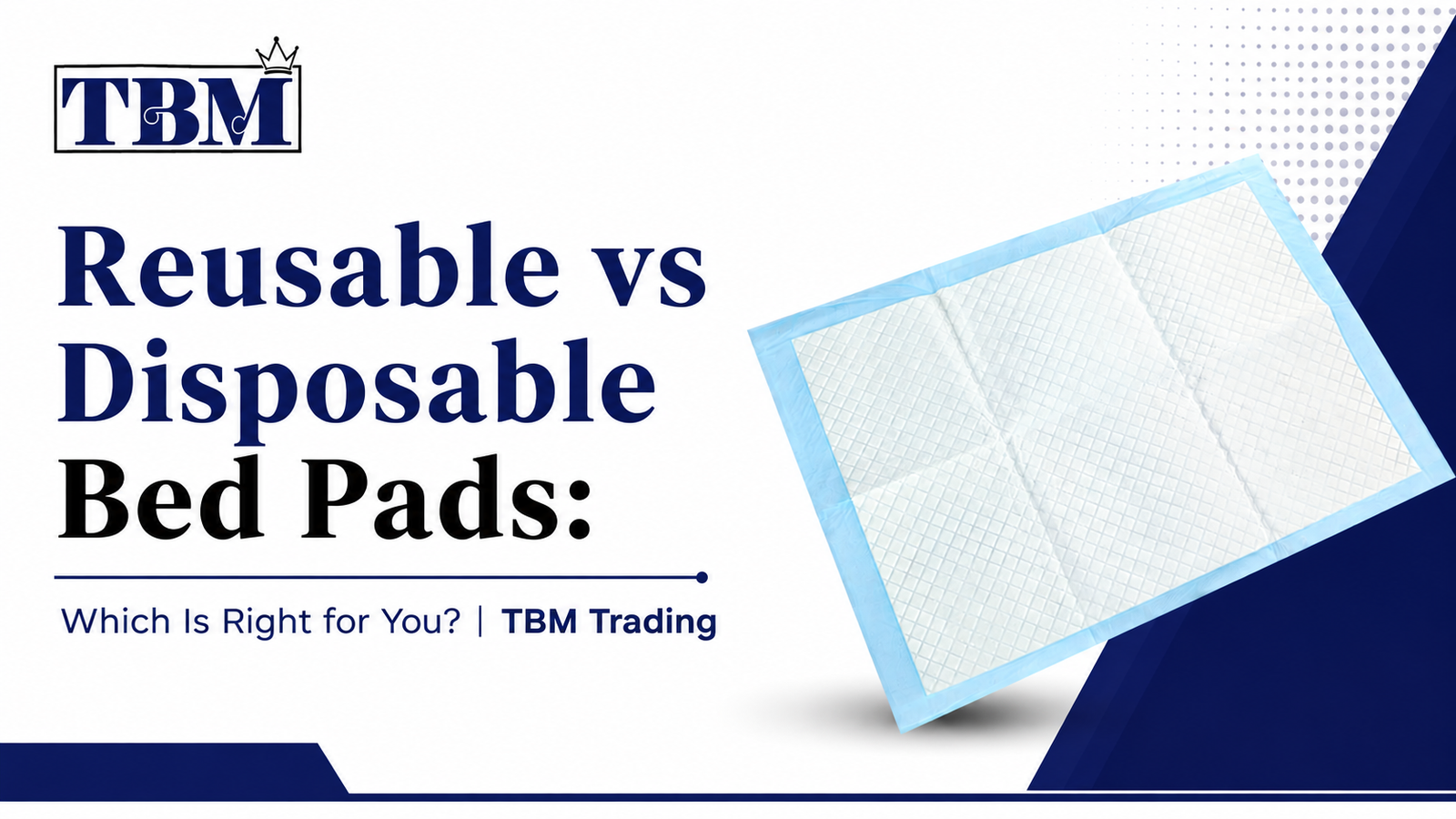
Reusable vs Disposable Bed Pads: Which Is Right for You?
Anyone managing incontinence care eventually asks the same question: is it better to wash and reuse bed pads, or use disposable ones and throw them away? The honest answer is “it depends” — but it depends on specific, measurable things like laundry capacity, time available, absorbency needs, and budget. This guide breaks the decision down properly so you’re not guessing.
What’s the Difference Between Reusable and Disposable Bed Pads?
Reusable bed pads are made from layered fabric — typically a cotton or polyester top layer, an absorbent middle layer, and a waterproof backing (often PUL or vinyl) — designed to be washed and reused dozens or even hundreds of times.
Disposable bed pads, like TBM Trading’s 60x60cm and 60x90cm packs, use a super-absorbent polymer (SAP) core with a waterproof plastic backing, and are discarded after a single use.
Both types serve the same core purpose — protecting mattresses, chairs, and bedding from leaks — but the day-to-day experience of using them is very different.
Cost Comparison
On the surface, reusable pads look cheaper because you’re not buying a new pack every month. But the real comparison needs to include:
- Upfront cost: Reusable pads typically cost more per unit initially (often £8–£15 each), while disposable packs like TBM’s pack of 100 (60x90cm) work out to around £0.20 per pad
- Ongoing costs: Reusable pads add water, electricity, and detergent costs with every wash cycle — easy to underestimate over a year
- Replacement frequency: Reusable pads lose absorbency over repeated washing and need replacing every 6–18 months depending on use, while disposables are always at full absorbency
For light, occasional use, reusable pads often come out ahead financially. For daily or overnight use, especially in care home or high-frequency settings, disposables frequently work out more cost-effective once laundry costs and pad replacement are factored in.
Hygiene and Skin Health
This is where the two options diverge the most. Disposable pads with a fresh SAP core lock moisture away from the skin immediately, which matters for preventing incontinence-associated dermatitis — the NHS guidance on urinary incontinence notes that keeping skin dry is a key part of preventing irritation and breakdown in long-term incontinence care.
Reusable pads can perform well too, but only if washed at a high enough temperature after every use and fully dried before reuse — inconsistent laundering increases the risk of bacterial buildup, especially in shared or multi-resident settings.
Convenience and Time
- Disposable pads: Use once, discard, done. No laundry cycle, no drying time, no risk of running out mid-wash
- Reusable pads: Require a dedicated wash routine, drying time (tumble drying can degrade the waterproof layer over time on some products), and enough stock on hand to cover the gap between uses
For carers already managing a demanding daily routine, the time saved by disposables is often the deciding factor — which is part of why our guide on managing elderly incontinence at night leans heavily on disposable products for overnight changes specifically.
Environmental Considerations
Reusable pads generally have a lower environmental footprint over their lifespan since they replace dozens of single-use products. Disposable pads generate more waste per use, though many modern disposable products use reduced-plastic backing and biodegradable cores compared to older generations. If sustainability is a primary concern, a hybrid approach — reusable pads for daytime chair protection, disposable pads for overnight or higher-leakage situations — is a reasonable middle ground.
Which Should You Choose?
| Factor | Reusable | Disposable |
|---|---|---|
| Best for | Light, occasional use | Daily or overnight use, higher leakage |
| Upfront cost | Higher per unit | Lower per unit |
| Ongoing cost | Water, detergent, electricity | Repeat purchase only |
| Time required | Washing and drying | None — use and discard |
| Hygiene control | Depends on wash quality | Consistent, fresh every use |
| Best setting | Home, low-frequency care | Care homes, hospitals, overnight care |
If you’re managing care for someone with moderate to heavy incontinence, or you’re a facility managing multiple residents, disposables generally offer more consistent hygiene and less day-to-day burden. Our bed pad size guide can help you pick the right disposable size once you’ve made the decision.
Frequently Asked Questions
Are reusable bed pads as absorbent as disposable ones? Quality reusable pads can match disposable pads when new, but absorbency typically declines with repeated washing. Disposable pads maintain full absorbency every time since each one is used only once.
How many times can a reusable bed pad be washed? Most reusable bed pads are rated for 200–500 wash cycles, though real-world lifespan depends on wash temperature, detergent type, and drying method. Waterproof backing tends to degrade faster than the absorbent layer.
Is it cheaper to use reusable or disposable bed pads long-term? It depends on frequency of use. For light, occasional use, reusable pads are often cheaper over a year. For daily or overnight use, disposable pads frequently work out more cost-effective once laundry costs, water, and pad replacement are included.
Can I use both reusable and disposable pads together? Yes, many households use reusable pads for lighter daytime protection and disposable pads for overnight or higher-leakage situations, balancing cost, convenience, and environmental impact.
Final Thoughts
There’s no universally “better” option — it comes down to how often pads are needed, how much time is available for laundry, and the level of incontinence being managed. For consistent, low-maintenance protection, browse TBM Trading’s full range of disposable bed pads in our incontinence shop, with free UK delivery and next-day dispatch. If you’re ordering in volume for a care setting, our B2B solutions page has details on bulk pricing.