Choosing the right incontinence bed pad size sounds simple until you’re standing in front of two nearly identical packs, both promising “maximum absorbency” and “leak-proof protection.” Get the size wrong and you end up with soaked sheets, more laundry, and a caregiver who’s frustrated at 2am. Get it right, and bed pads become one of the easiest, most cost-effective tools in a care routine.
This guide breaks down the difference between 60x60cm and 60x90cm disposable incontinence bed pads, who each size suits best, and how to work out how many you’ll actually need per month.
What Are Disposable Incontinence Bed Pads?
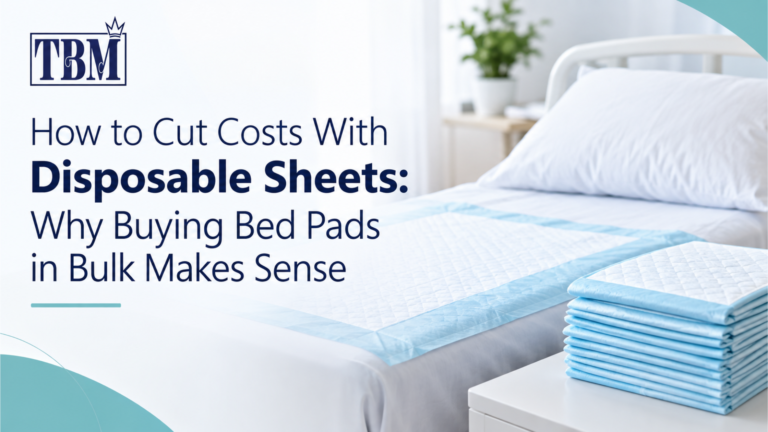
Disposable incontinence bed pads are absorbent sheets placed on top of a mattress, wheelchair seat, or changing surface to catch and lock away moisture before it reaches fabric underneath. They typically have three layers: a soft top layer for skin comfort, an absorbent core (usually cellulose or a super-absorbent polymer, SAP), and a waterproof plastic backing that stops leaks reaching the mattress.
They’re used across a wide range of situations: elderly care at home, hospital and care home settings, post-surgical recovery, and even outside their “intended” use — TBM Trading customers have reported using them on baby changing mats and pet bedding, since the absorbency and waterproof backing work just as well there.
60x60cm vs 60x90cm: Key Differences
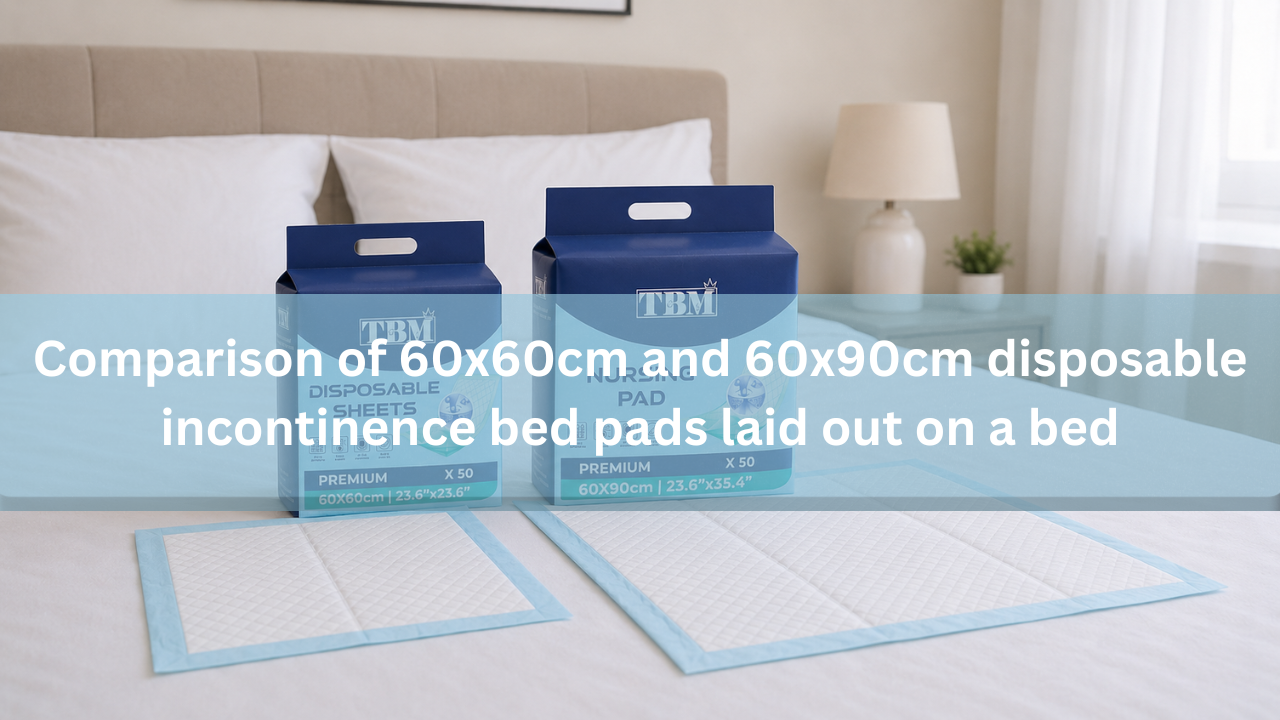
The number in each product name refers to the pad’s dimensions in centimetres. That difference of 30cm in length changes what the pad is actually good for.
60x60cm Pads – Best For
- Single-use, spot protection — ideal for wheelchairs, recliners, changing tables, or as a top-up layer under a smaller area of the body
- Lighter incontinence or occasional leaks rather than full overnight coverage
- Portability — smaller pads pack down easily for travel or day bags
- Available from TBM Trading in a pack of 50 (60x60cm) at £9.99
60x90cm Pads – Best For
- Full bed protection — the extra length covers more of the torso and hip area, which is where most nighttime leaks originate
- Heavier incontinence or extended periods between changes, such as overnight use
- Care home and hospital settings, where consistent, wider coverage reduces the risk of laundry changes
- Available from TBM Trading as a pack of 50 (60x90cm) at £12.99, or a bulk pack of 100 (60x90cm) at £20.00 for better value per pad
How to Choose the Right Size for Your Needs
Home Care / Individual Use
For light to moderate incontinence at home, many people find a mix of both sizes works best — 60x60cm for daytime chair use, 60x90cm for overnight bed protection. If you’re a family carer managing this for a relative, it’s worth reading our guide on managing elderly incontinence at night, which covers routine changes and skin care alongside pad choice.
Care Homes & Hospitals (Bulk Buyers)
Facilities managing multiple residents typically standardise on the 60x90cm size for full-bed coverage and order in bulk to reduce per-unit cost. If you’re purchasing on behalf of a care facility, our B2B solutions page outlines wholesale pricing and account options.
Absorbency and Material Considerations
Size isn’t the only factor — absorbency matters just as much. Look for pads with:
- A super-absorbent polymer (SAP) core, which locks liquid away rather than letting it sit on the surface (reduces skin irritation and odour)
- A waterproof, breathable backing that protects mattresses without trapping heat
- Quilted or textured top sheets, which help wick moisture downward instead of pooling
According to the NHS guidance on managing incontinence, good absorbent products combined with a consistent changing schedule significantly reduce skin breakdown risk in long-term care.
How Many Pads Do You Need Per Month?
As a rough estimate for planning bulk orders:
| Use Case | Pads per day | Monthly estimate |
|---|---|---|
| Light daytime protection only | 1–2 | 30–60 pads |
| Overnight use only | 1 | 30 pads |
| Full-time care (day + night) | 2–4 | 60–120 pads |
A pack of 100 (60x90cm) comfortably covers a month of full-time overnight use for one person, with free UK delivery and next-day dispatch on orders placed before 3pm — see our full delivery policy for details.
VAT Relief on Incontinence Bed Pads
If you or the person you’re caring for is chronically sick or disabled, you may be eligible for VAT relief, which removes the standard 20% VAT from qualifying purchases. We’ve written a full breakdown in our guide to claiming VAT relief on incontinence products, including exactly how to complete the declaration at checkout.
Frequently Asked Questions
What size incontinence bed pad should I buy? Choose 60x60cm for light, spot-specific protection (chairs, changing tables, travel) and 60x90cm for full overnight bed coverage or heavier incontinence. Many households use both.
Can I reuse disposable bed pads? No. Disposable bed pads are designed for single use only. Once the absorbent core has taken on liquid, its protective barrier is compromised and it should be discarded and replaced.
How often should bed pads be changed? As a general rule, change a bed pad immediately after use and at least once every 24 hours even without visible soiling, to maintain hygiene and reduce skin irritation risk.
Are TBM Trading bed pads suitable for hospital beds? Yes. Both the 60x60cm and 60x90cm pads are designed to fit standard single and hospital-width beds, and are widely used in home care and care facility settings across the UK.
The right bed pad size comes down to coverage need, not just price per pack. For most households, keeping both 60x60cm and 60x90cm pads on hand covers every situation from a quick chair change to a full night’s protection. Browse the complete range in our incontinence shop, or get in touch if you need help working out bulk quantities for a care setting.