If you’re new to incontinence care, either for yourself or someone you’re supporting, disposable incontinence sheets are usually one of the first products recommended — but it’s not always clear exactly what they do differently from a standard mattress protector, or where they can actually be used beyond the bed. This guide covers both.
What Is a Disposable Incontinence Sheet?
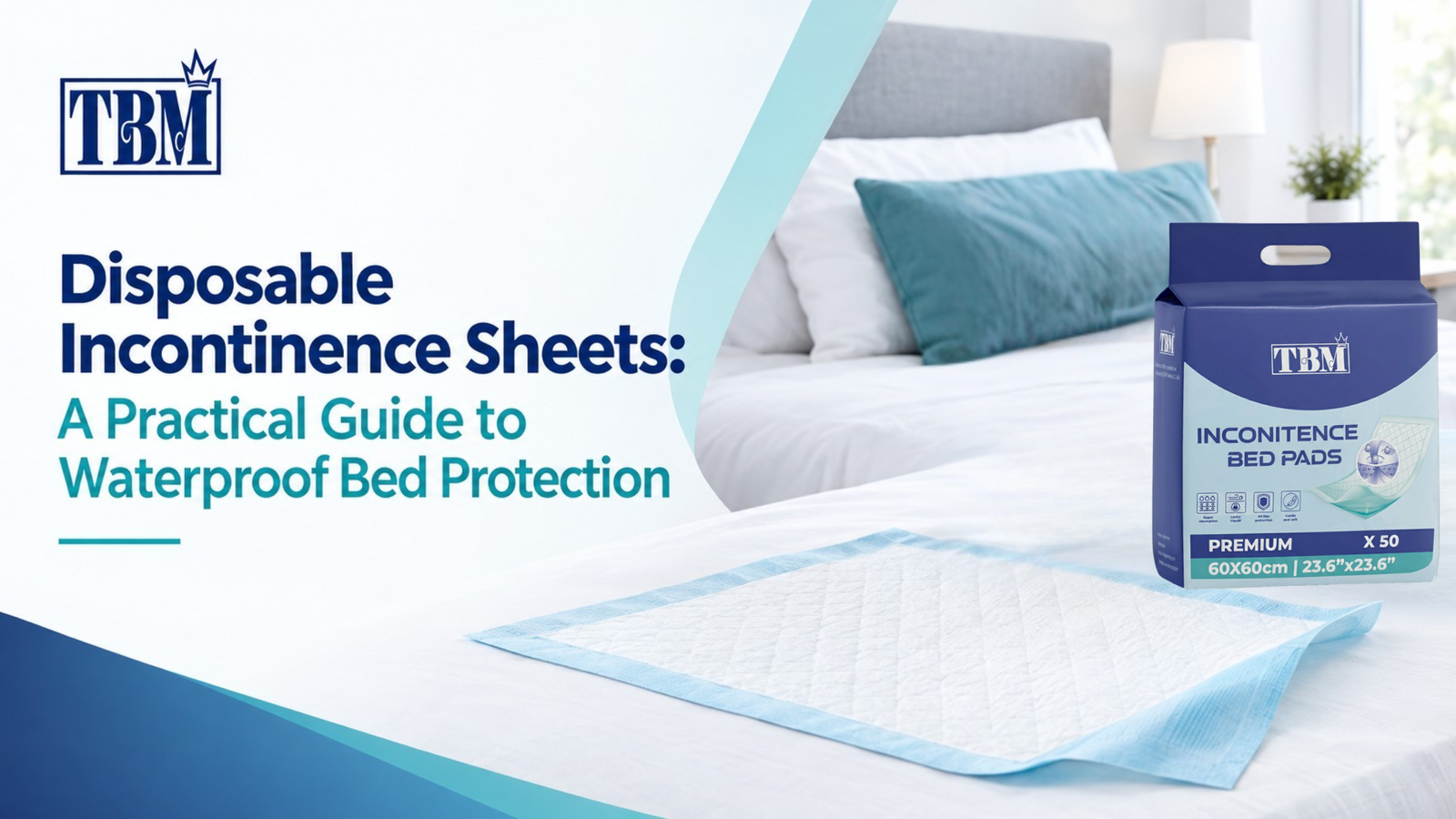
A disposable incontinence sheet provides a protective layer between a person and the surface underneath. It is commonly used on beds, chairs, sofas, and other surfaces to help manage moisture and protect furniture and mattresses. Unlike a fitted mattress protector, it’s designed for single use and disposal, which means fresh, full absorbency every time rather than relying on washing and reuse.
TBM Trading’s incontinence sheets are available in two core sizes — 60x60cm for smaller coverage areas and 60x90cm for full bed protection — both built with the same multi-layer absorbent construction.
How Do Disposable Incontinence Sheets Work?
Every disposable incontinence sheet relies on the same basic principle: liquid needs to move quickly away from the surface, get locked into an absorbent core, and stay fully contained by a waterproof backing. We’ve covered the full breakdown of these layers in our guide on what’s inside disposable bed pads, but in short — a soft top layer allows fast liquid transfer, an absorbent core (typically cellulose combined with super-absorbent polymer) locks it away, and a waterproof backing prevents any leakage through to the surface underneath.
Waterproof vs. Absorbent Protection
These two terms are sometimes used interchangeably, but they describe different functions:
- Absorbent protection refers to the sheet’s ability to take in and hold liquid, preventing it from pooling on the surface
- Waterproof protection refers specifically to the backing layer’s ability to stop liquid from passing through to whatever is underneath
A genuinely effective incontinence sheet needs both — strong absorbency alone doesn’t help if the backing eventually leaks through once the core is saturated, and waterproof backing alone without good absorbency just means liquid sits uncomfortably on the surface rather than being managed properly.
Where Can You Use Disposable Incontinence Sheets?
Beds
The most common use case — placed directly on top of a fitted sheet to protect the mattress overnight. Our guide to protecting your mattress from incontinence leaks covers how to layer sheets with a waterproof mattress protector for maximum protection.
Sofas
Placed across a sofa cushion, an incontinence sheet protects upholstery from spills or leaks during the day without needing to cover the entire sofa in plastic or specialist covers.
Chairs
Ideal for recliners, dining chairs, or any seating used for extended periods, offering localised protection without affecting comfort.
Wheelchairs
A properly sized sheet can be placed on a wheelchair seat to manage moisture throughout the day, particularly useful for individuals who spend long periods seated.
Benefits of Disposable Bed Protection
- Consistent absorbency — each sheet is used once at full capacity, unlike reusable options that lose effectiveness over repeated washes
- Hygiene — a fresh sheet every time reduces the risk of bacterial buildup that can occur with inconsistent laundering of reusable products
- Convenience — no washing, drying, or storage of soiled fabric required
- Versatility — the same product works across multiple surfaces, from beds to wheelchairs, reducing the need for multiple specialist products
According to the NHS guidance on urinary incontinence, maintaining dry skin and consistent hygiene practices is a key part of preventing skin irritation and infection risk in long-term incontinence management — both of which disposable sheets are specifically designed to support.
How to Choose the Right Sheet
Consider the following before purchasing:
- Surface size — a 60x60cm sheet suits chairs and smaller areas, while 60x90cm offers full bed coverage
- Frequency of use — daily or overnight use benefits from bulk packs, which we cover in our guide on cutting costs with bulk disposable sheets
- Absorbency level — check for a genuine SAP-based core rather than cellulose alone
- VAT eligibility — chronically sick or disabled buyers may qualify for VAT relief, explained fully in our VAT relief guide
Frequently Asked Questions
Are disposable incontinence sheets waterproof? Yes, quality disposable incontinence sheets include a waterproof backing layer designed to prevent moisture from passing through to the surface underneath, while the top layers manage absorption of liquid.
Where can disposable incontinence sheets be used? They can be used on a wide range of surfaces including beds, sofas, chairs, and wheelchairs, making them a versatile protective option for both overnight and daytime use across the home.
Are disposable incontinence sheets suitable for elderly care? Yes, disposable incontinence sheets are widely used in elderly care settings, both at home and in care facilities, to help manage moisture and protect furniture and mattresses during daily care routines.
How do you dispose of an incontinence sheet? Used sheets should be folded inward to contain any liquid, sealed in a bag, and disposed of in general household waste, following the same hygiene practices used for other single-use absorbent products.
Final Thoughts
Disposable incontinence sheets offer flexible, hygienic protection across far more surfaces than just the bed, and understanding how the absorbent and waterproof layers work together makes it easier to choose the right product for your specific situation. Explore TBM Trading’s full range of incontinence products with free UK delivery, or contact us for guidance on choosing the right size and quantity.