Why Parents Use Incontinence Pads as Baby Changing Mats
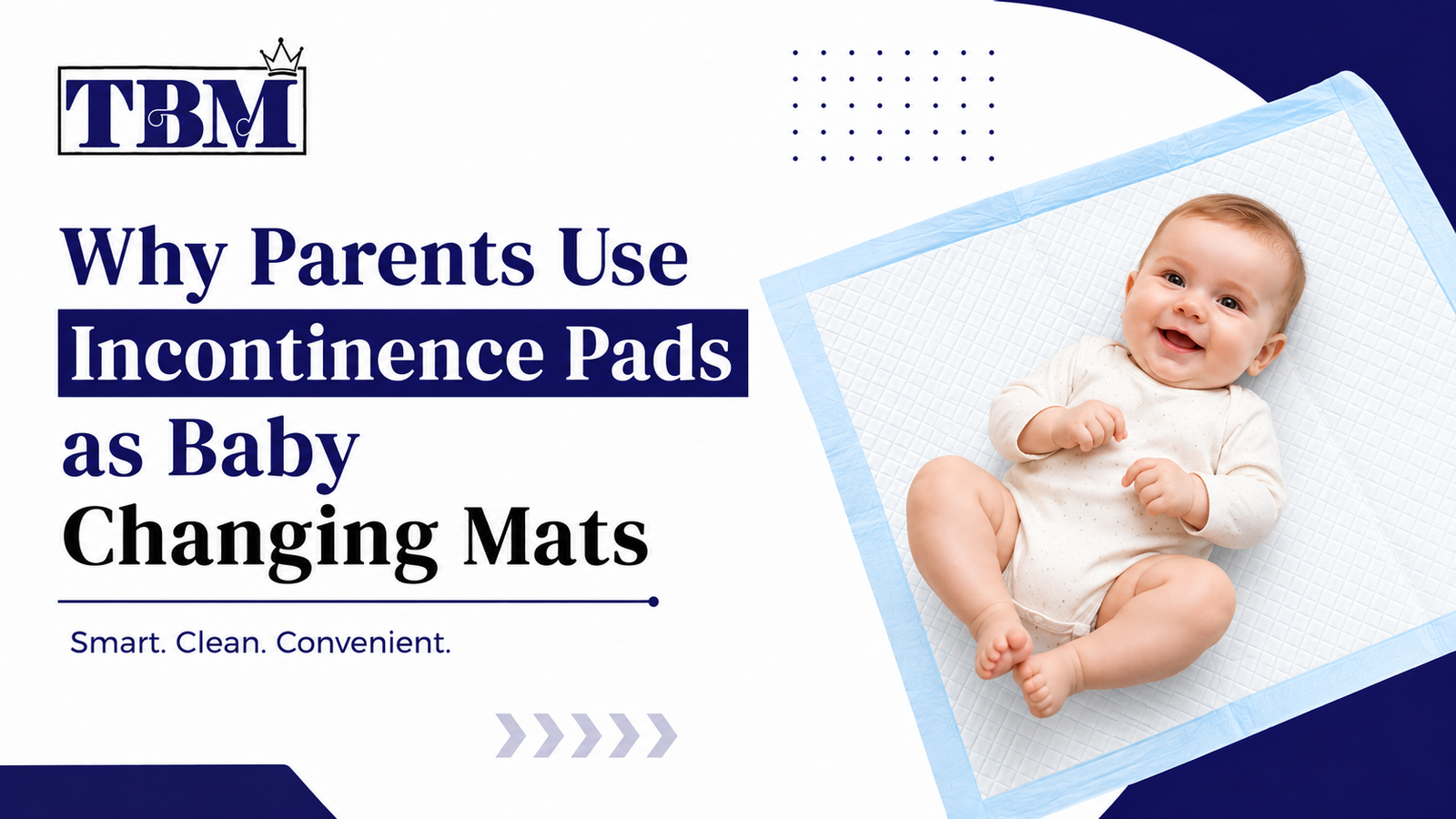
Search parenting forums for “changing mat alternative” and one answer comes up again and again: disposable incontinence pads. It’s not an obvious swap at first glance, but once you look at what the two products are actually built to do, it makes complete sense — and a growing number of parents are using them for exactly this reason.
Why the Overlap Makes Sense
Baby changing mats and incontinence bed pads are solving the same underlying problem: protecting a surface from moisture while keeping a person comfortable during a change. Both typically feature:
- A soft top layer against the skin
- An absorbent core to catch leaks
- A waterproof backing to protect whatever’s underneath
The main difference is that dedicated baby changing mats are usually a fixed wipeable surface, while disposable incontinence pads, such as TBM Trading’s 60x60cm bed pads, are single-use, absorbent, and disposable — which turns out to be a genuine advantage in a lot of real-world changing situations.
Practical Benefits for Parents
No Wiping Down Required
A traditional changing mat needs wiping and sometimes disinfecting after a messier nappy change. A disposable pad is simply folded up and thrown away, which matters a lot at 3am or when you’re out and don’t have wipes to spare on the mat itself.
Better Absorbency for Leaks
Nappy leaks happen, especially overnight or during growth spurts. A disposable incontinence pad’s absorbent core is designed to lock away significantly more liquid than a standard wipeable mat surface, reducing the risk of leaks reaching furniture, car seats, or bedding underneath.
Travel and On-the-Go Use
Packing a full-size changing mat isn’t always practical. A pack of disposable pads is flat, lightweight, and can be used once and discarded rather than carried home soiled — useful for car journeys, hotel stays, or visiting family without a dedicated changing station.
Protecting Furniture During Growth Stages
Many parents use disposable pads under a baby during tummy time, on sofas during feeding, or under a bassinet mattress as an extra layer of leak protection — all without needing to invest in multiple specialty products.
How to Choose the Right Size
For most nappy-change purposes, the 60x60cm size offers enough coverage for a baby lying down without excess material to fold or manage, and is easy to keep several packs on hand around the house. Parents managing frequent leaks or using pads for overnight bassinet protection sometimes opt for the larger 60x90cm size for broader coverage. Our full bed pad size guide breaks down the sizing differences in more detail if you’re deciding between the two.
Safety Considerations
Disposable incontinence pads aren’t marketed or designed specifically for infants, so a few practical points are worth keeping in mind:
- Always supervise a baby on any pad or mat surface — never leave them unattended
- Check the material — TBM Trading pads use a soft, non-woven top layer designed for sensitive skin contact, similar in principle to standard changing mat materials
- Use as a protective layer, not a substitute for proper infant safety equipment like car seats or cots
- The NHS guidance on nappy changing and hygiene recommends changing nappies promptly and keeping the changing area clean, which applies whether you’re using a dedicated mat or a disposable pad underneath
Cost Comparison: Disposable Pads vs Dedicated Changing Mats
A dedicated wipeable changing mat is typically a one-time purchase (£15–£40), but needs regular cleaning and eventually replacing if it cracks or stains. Disposable pads have an ongoing cost but eliminate the need for the mat altogether in many use cases — a bulk pack such as TBM Trading’s pack of 100 (60x90cm) costs around £20, working out to roughly £0.20 per change, which is often cheaper than the wipes and cleaning products used to maintain a traditional mat over the same period.
Frequently Asked Questions
Are incontinence pads safe to use for babies? They’re not specifically marketed for infants, but many parents use them safely as a protective layer under a baby during nappy changes, always with supervision. The soft top layer and absorbent core function similarly to dedicated changing mat materials.
Can I use a disposable bed pad instead of a changing mat? Yes, many parents use disposable bed pads as a full alternative or supplement to a traditional changing mat, particularly for travel, overnight use, or as an extra leak-protection layer on furniture.
What size pad is best for baby changing? A 60x60cm pad typically offers enough coverage for a baby lying down during a nappy change without excess material. For broader protection, such as under a bassinet mattress, a 60x90cm pad may be more suitable.
How often should I change the pad during use? Change the pad immediately after each use, the same way you would a soiled nappy, since the absorbent core is designed for single use only and shouldn’t be reused once wet or soiled.
Final Thoughts
Using disposable incontinence pads as a changing mat alternative isn’t a workaround — it’s a genuinely practical solution built on the same absorbency and hygiene principles as dedicated baby products, often at a lower ongoing cost. Browse TBM Trading’s full range of disposable bed pads with free UK delivery, or get in touch via our contact page if you’re not sure which size suits your routine.