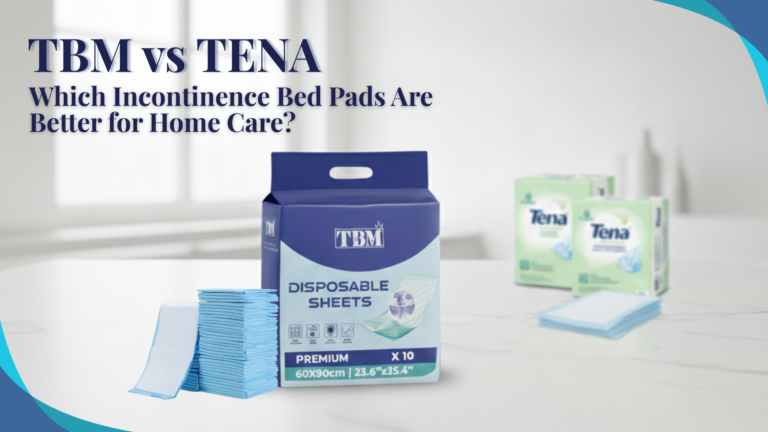

Choosing between 60×60 and 60×90 incontinence bed pads comes down to how much coverage, absorbency, and overnight protection you actually need for reliable leak prevention.
Which size incontinence bed pad 60×60 or 60×90 provides better protection for your specific level of incontinence care and sleeping comfort? The answer depends on mobility, absorbency needs, and how long the pad must perform especially overnight.
When comparing 60×60 vs 60×90 bed pads, many buyers assume bigger is always better. In reality, the right size depends on your care situation, budget, and how the pad will be used daily. Whether you’re managing elderly care, post-surgery recovery, or general incontinence protection, choosing the correct pad size can significantly improve hygiene, comfort, and mattress longevity.
This in-depth guide will help you understand incontinence bed pads sizes comparison, practical use cases, and how to confidently choose the best option for your needs.
Quick Answer
- 60×60 bed pads are best for light to moderate incontinence and daytime use
- 60×90 bed pads provide better coverage and are ideal for overnight or heavy use
- Larger pads reduce leaks for restless sleepers or limited mobility patients
- Smaller pads are more budget-friendly and easier to replace frequently
- Your choice should balance coverage, absorbency, comfort, and cost
Understanding Incontinence Bed Pad Sizes :- 60×60 vs 60×90 bed pads
In the 60×60 vs 60×90 bed pads debate, the size difference directly impacts performance.
- 60×60 cm: Covers a smaller central area (hips/torso)
- 60×90 cm: Extends coverage toward the thighs and lower body
These pads also called disposable underpads 60×60 vs 60×90, hospital bed chux pads sizes, or absorbent bed pads for home care serve as a protective layer between the user and mattress.
They are widely used in:
- UK hospitals and NHS care settings
- Nursing homes and assisted living
- Home care for elderly individuals
- Post-operative recovery environments
60×60 vs 60×90 Bed Pads: Detailed Comparison
| Feature | 60×60 Bed Pads | 60×90 Bed Pads |
|---|---|---|
| Coverage Area | Torso-focused | Torso + legs |
| Absorbency Capacity | Moderate | High |
| Best Use | Daytime/light leaks | Overnight/heavy leaks |
| Movement Support | Limited | Excellent |
| Leak Protection | Medium | Maximum |
| Cost Efficiency | High for frequent use | Better for long-term/night use |
When Should You Choose 60×60 Bed Pads?
Ideal for Light to Moderate Incontinence
If leakage is occasional or minimal, 60×60 bed pads provide sufficient protection without unnecessary bulk.
They are especially useful for:
- Independent users
- Short-duration use
- Light bladder leakage
👉 60×60 incontinence bed pads pack of 50
Perfect for Daytime Protection
During the day, users are more mobile, and pads are changed more frequently. A smaller pad:
- Is easier to replace
- Reduces waste
- Keeps costs manageable
Suitable for Furniture Protection
60×60 pads are often used on:
- Chairs
- Wheelchairs
- Sofas
This makes them versatile for incontinence mattress protection sheets beyond the bed.
When Should You Choose 60×90 Bed Pads?
Best for Heavy or Overnight Incontinence
When comparing 60×60 vs 60×90 bed pads, the larger size clearly excels in overnight scenarios.
They:
- Hold more liquid
- Reduce the need for nighttime changes
- Provide peace of mind
👉 60×90 incontinence bed pads pack of 50
Ideal for Restless Sleepers
If the user moves frequently:
- Rolls over
- Changes positions
- Slides down the bed
Then 60×90 pads ensure consistent coverage.
Recommended for Elderly & Limited Mobility
For elderly individuals or those with mobility challenges:
- Repositioning is limited
- Accidental leaks are more likely
Larger pads reduce caregiver workload and improve hygiene outcomes.
Step-by-Step Guide: Choosing the Right Pad Size, 60×60 vs 60×90 bed pads
1. Evaluate Incontinence Severity
- Light → 60×60
- Moderate to heavy → 60×90
2. Consider Sleep Duration
- Short naps → smaller pads
- Full-night sleep → larger pads
3. Assess Movement Levels
- Minimal movement → 60×60
- Frequent movement → 60×90
4. Determine Coverage Needs
- Targeted protection → 60×60
- Full-body coverage → 60×90
Absorbency Levels Explained ,60×60 vs 60×90 bed pads
Not all waterproof bed pads for incontinence care are equal. Absorbency depends on:
- Core material (fluff pulp + SAP gel)
- Pad thickness
- Surface area
Why Size Matters for Absorbency
Even with similar materials:
- 60×90 pads absorb more due to larger area
- They distribute moisture better
- Reduce pooling and skin irritation
According to NHS continence care guidance, choosing the correct absorbent product is essential for preventing skin breakdown and maintaining dignity.
Skin Health & Hygiene Considerations
Poor pad selection can lead to:
- Skin irritation
- Pressure sores
- Odour buildup
Best practices include:
- Using breathable top layers
- Changing pads promptly
- Selecting the right size for full coverage
The NICE continence guidelines emphasize proper product selection as part of comprehensive care.
Cost vs Value: Which Size Saves More?
60×60 Pads
- Lower upfront cost
- Better for frequent changes
- Ideal for short-term use
60×90 Pads
- Higher cost per unit
- Fewer replacements needed
- Better for overnight value
💡 Pro Tip: For many households, using both sizes strategically offers the best balance.
Real-Life Scenarios
Scenario 1: Elderly Parent at Home
- Moderate incontinence
- Limited mobility
👉 Best choice: 60×90
Scenario 2: Post-Surgery Recovery
- Temporary light leakage
👉 Best choice: 60×60
Scenario 3: Overnight Bed Wetting
- High absorbency needed
👉 Best choice: 60×90
Scenario 4: Wheelchair Use
- Daytime sitting
👉 Best choice: 60×60
Common Mistakes to Avoid
- Choosing smaller pads to save money (leads to leaks)
- Ignoring movement patterns
- Not considering overnight needs
- Using one size for all situations
Best Practices for Maximum Protection
To get the most from absorbent bed pads for home care:
- Position under hips and lower back
- Ensure the pad is flat and secure
- Combine with fitted waterproof sheets
- Use larger pads for overnight safety
Considerations for UK Households
Climate & Bedding
UK homes often use:
- Duvets
- Layered bedding
This increases heat and moisture retention, making 60×90 pads more suitable for overnight use.
Healthcare Standards
Organisations like the British Geriatrics Society emphasize:
- Dignity in care
- Skin protection
- Proper absorbent product use
This aligns with choosing appropriately sized adult bed wetting protection pads.
Pros and Cons Summary ,60×60 vs 60×90 bed pads
60×60 Bed Pads
Pros:
- Affordable
- Easy to replace
- Versatile
Cons:
- Limited coverage
- Not ideal for overnight use
60×90 Bed Pads
Pros:
- Maximum coverage
- Better for heavy-duty bed pads for overnight use
- Reduces leakage risk
Cons:
- Slightly more expensive
- More material used
❓ FAQs
1. Which is better: 60×60 vs 60×90 bed pads?
60×90 bed pads are better for heavy incontinence and overnight use, while 60×60 pads work well for light leakage and daytime protection.
2. Are 60×90 bed pads necessary for overnight use?
Yes, in most cases. Their larger surface area provides better protection and reduces the risk of leaks during sleep.
3. Can I use 60×60 pads for elderly care?
Yes, but only for mild cases. For moderate to severe incontinence, 60×90 pads are more effective.
4. Do larger pads absorb more liquid?
Yes. Larger pads typically contain more absorbent material and provide better moisture distribution.
5. How often should bed pads be changed?
Pads should be changed after each use or at least daily to maintain hygiene and prevent skin issues.
6. Are disposable underpads safe for sensitive skin?
Most are designed with soft, breathable layers that are safe for sensitive skin, but always choose high-quality options.
7. Can bed pads be used on sofas or chairs?
Yes. 60×60 pads are especially suitable for furniture protection due to their compact size.
8. What is the best size for heavy incontinence?
60×90 bed pads are the best choice due to their larger coverage and higher absorbency.
📌 Final Thoughts
When evaluating 60×60 vs 60×90 bed pads, the decision ultimately comes down to your care needs. For light, occasional use, 60×60 pads offer a cost-effective solution. However, for overnight protection, heavy incontinence, and maximum coverage, 60×90 pads are the superior choice.
In most UK care scenarios, especially for elderly individuals, larger pads provide better hygiene, reduced laundry, and improved peace of mind.
📣 Need Help Choosing the Right Bed Pads?
If you’re still unsure which size suits your needs, explore the full range at TBM Trading. Whether you’re looking for everyday protection or heavy-duty overnight solutions, you’ll find reliable options designed for comfort, absorbency, and care.