
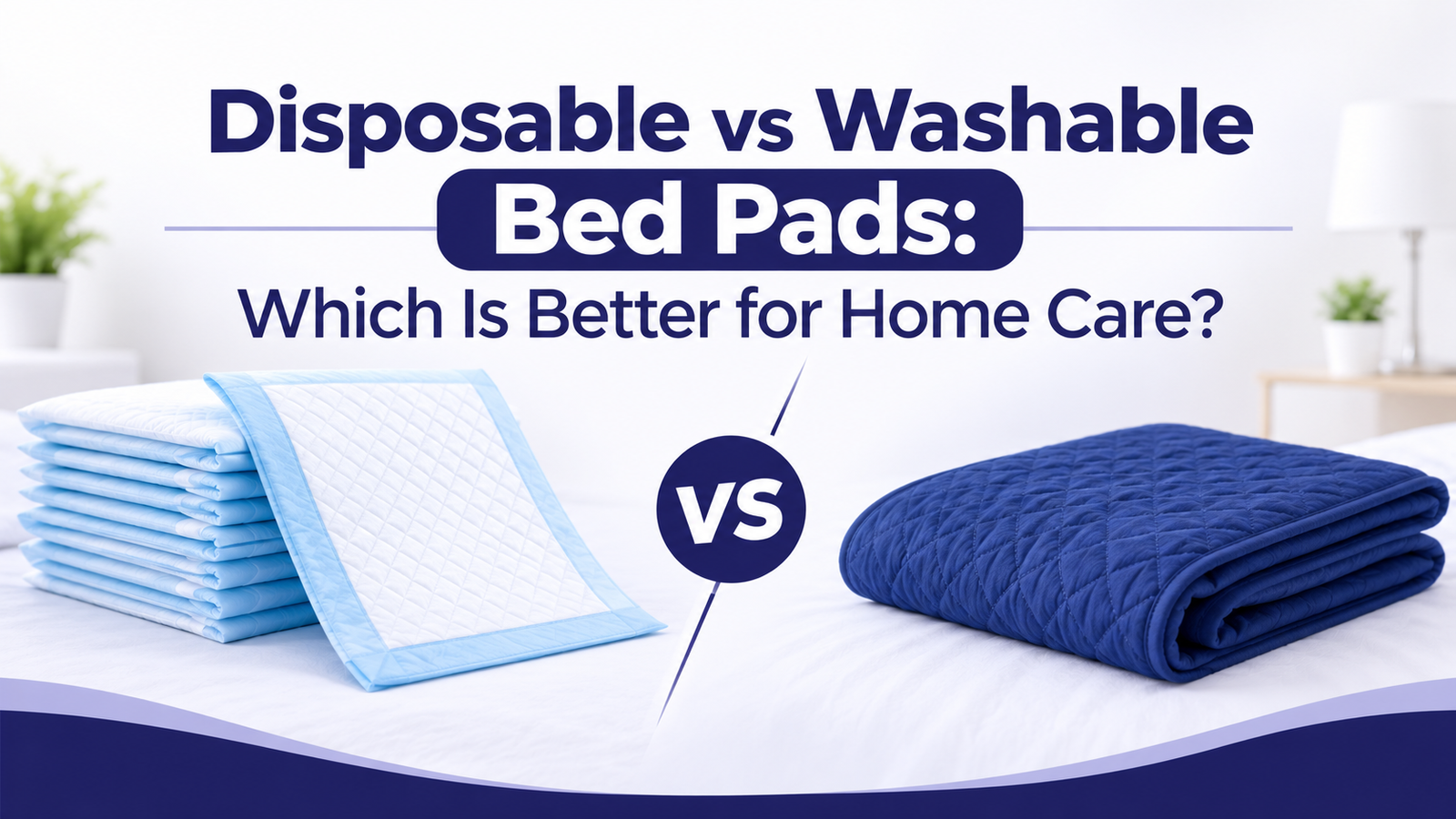
Disposable bed pads suit you best when you want no laundry, quick changes and predictable hygiene, such as overnight, after surgery or when several people share the caring. Washable pads cost more up front and can work out cheaper for light, predictable leaks if you are happy to wash them. Many families use a washable pad underneath and a disposable one on top.
There is no wrong answer here. It comes down to how often you change the bed, how much laundry your week can take, and what you spend per night.
The two options side by side
| Disposable bed pads | Washable bed pads | |
|---|---|---|
| Upfront cost | Low per pack | Higher per pad |
| Running cost | Pay for every pad used | Washing, drying and replacement |
| Laundry | None | Heavier, more often |
| Changing at night | Peel off, bin, replace | Strip, wash, dry, spare needed |
| Hygiene | Fresh surface every time | Depends on washing at the right temperature |
| Typical sizes | 60x60cm and 60x90cm | Single and double bed sizes, often with tuck-in flaps |
| Travel and short stays | Easy to pack | Bulky when wet |
| Environmental footprint | Waste to landfill | Water, energy and detergent |
| Best for | Overnight, recovery, heavy use, care settings | Light, predictable leaks at home |
How to work out which costs less
Divide what you pay by how many uses you expect. A washable pad bought for £80 and washed 100 times costs 80p per use before you count water, electricity and detergent. A disposable pad costs its pack price divided by the pack size. [ADD: TBM 60x90cm price per pad from the product page.]
Then add your time. If you are doing a daily wash for a parent as well as your own household, the cheaper option on paper may not be the cheaper one in practice.
Which size do I need?
A 60x90cm disposable pad covers the hip area and sits across a single or double bed. Washable double-bed pads are often around 139x91cm, which spans a double bed in one piece. If you want that width with disposables, lay two 60x90cm pads side by side.
Layering: the practical middle ground
Plenty of carers put a washable pad flat on the mattress and a disposable pad on top. The washable layer protects the mattress for the long term, and the disposable layer takes the leak. When it is wet, you remove the top pad and the bed underneath is still dry.
A word on hygiene
Wash reusable pads on the temperature the manufacturer recommends, and do not use a pad that is still damp. Never flush a disposable bed pad. Wrap it and put it in the bin.
VAT on bed pads
Both disposable and washable incontinence pads can be bought at 0% VAT if you are chronically sick or disabled and buying for your own use at home (HMRC guidance). See our UK VAT relief guide.
Disposable bed pads in bulk
TBM Trading is a UK incontinence bed pad specialist. Our 60x90cm and 60x60cm disposable pads come in packs of 50 and 100, with free UK delivery and next-day dispatch on orders placed before 3pm, Monday to Friday. See bed pads.
FAQs
Are washable bed pads better than disposable ones? Neither is better for everyone. Washable pads suit light, predictable leaks. Disposable pads suit heavier use, overnight protection and anyone who wants no extra laundry.
How many times can you wash a bed pad? It depends on the product. Some makers claim up to 300 washes. Check the maker’s care label rather than assuming, and replace a pad that has stopped absorbing or has worn through.
What size bed pad do I need for a double bed? A 60x90cm disposable pad covers the hip area. For wider coverage, use two side by side, or choose a washable double-bed pad of around 139x91cm.
Can I flush disposable bed pads? No. They can block drains. Wrap the used pad and put it in your household bin.