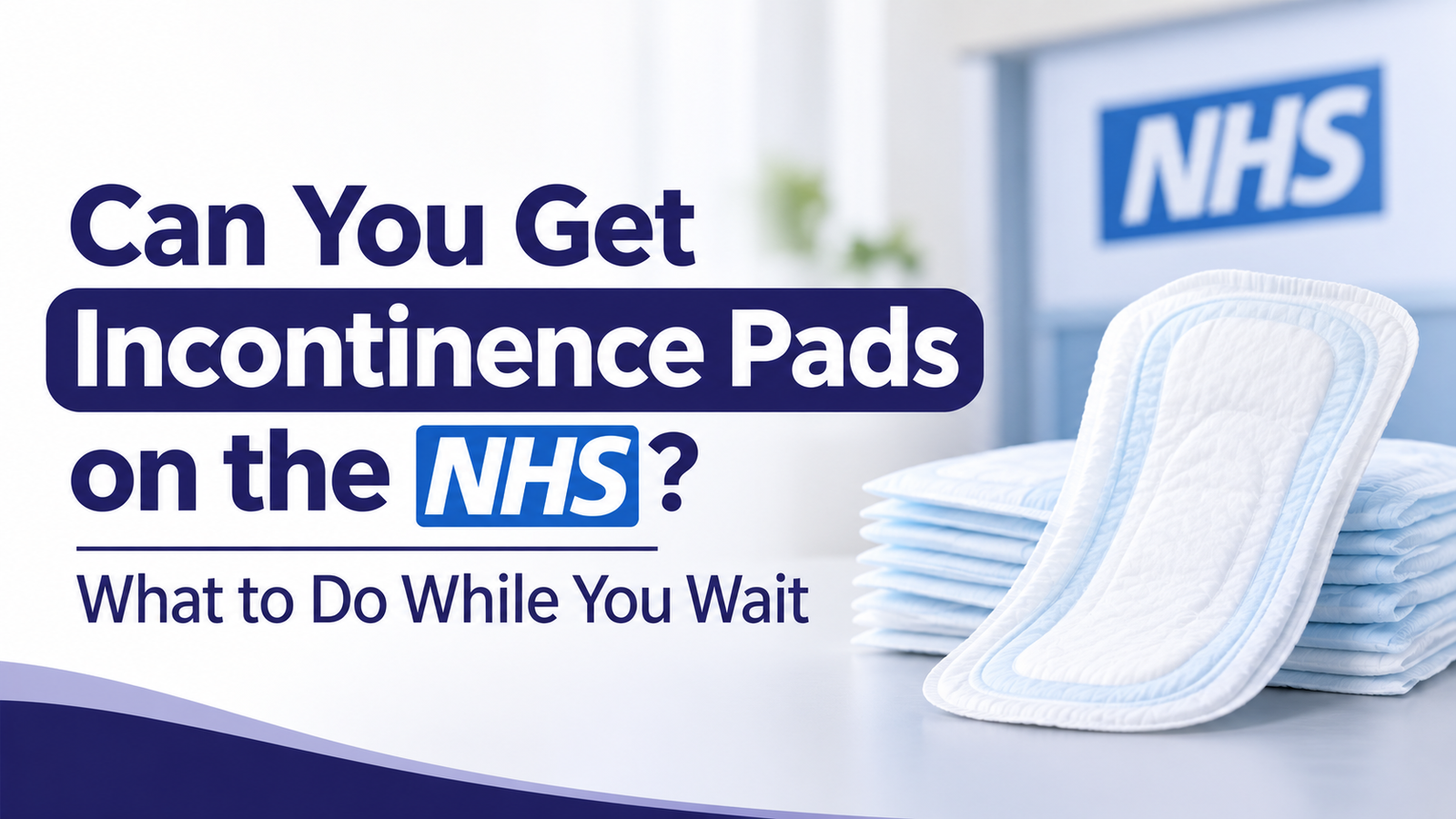
Yes, you can get free incontinence pads on the NHS, but only after a continence assessment by a nurse, and what you are offered depends on where you live. Many areas set a daily limit and do not supply light pads. If you are waiting for an assessment, you will usually need to buy your own in the meantime.
If you are arranging this for a parent, it can feel like a maze. Here is how it usually works, in the order you will meet it.
Who can get NHS incontinence pads?
You may be eligible if you have long-term incontinence, or if it has started after a serious medical event such as a stroke. A nurse decides after an assessment, and until that is done it is your responsibility to buy products yourself (Royal Berkshire NHS Foundation Trust).
Continence services are set locally, so two people with the same needs can be offered different things in different places.
How to ask for a continence assessment
- Start with your GP or practice nurse, who can refer you to your local continence or bladder and bowel service. Check that service’s website too, as some areas have their own referral route.
- Attend the assessment. A continence nurse will ask about leaks, fluids, mobility and daily routine. It can include urine tests and sometimes a pad test to measure leakage.
- Find out what you are offered. If you qualify, products are usually delivered to your home or collected from a set pharmacy.
- Expect a review. Needs are typically reassessed each year, and you can ask sooner if things change.
What the NHS may not cover
NHS continence products are provided according to need. As one example, a published NHS policy from Doncaster does not issue pads for small amounts of leakage and sets a maximum of 4 disposable pads in 24 hours (Doncaster specialist continence service). Your area may differ, so ask what applies to you.
That is why many families top up privately: for extra pads on heavy days, for bed and chair protection, and for the weeks before an assessment appointment comes through.
What to do while you wait
- Buy a small stock of bed pads now. Waiting a few weeks is common in some areas, and a dry bed makes everything else easier.
- Keep a simple diary. Note roughly how many pads are used each day and night. It helps the nurse and speeds up the assessment.
- Check VAT. If your parent is chronically sick or disabled and buying for their own use at home, incontinence products can be bought at 0% VAT. See our UK VAT relief guide.
- Ask what is included. Some services supply body-worn products only. Bed pads may be your own purchase.
If your parent lives in a care home
Care England guidance says people in care homes have the same right to NHS continence services as anyone else, and a trust that supplies products free to people in the community should not charge care home residents for equivalent items (Care England). Care home managers can read more in our VAT and care homes guide.
Bed pads you can order today
TBM Trading is a UK incontinence bed pad specialist. Our 60x90cm and 60x60cm disposable bed pads come in bulk packs, with free UK delivery and next-day dispatch on orders placed before 3pm, Monday to Friday. Shop bed pads or call +44 7351 161834 and we will help you pick a size.
FAQs
Can I get incontinence pads on prescription? In some areas pads are prescribed, in others they are delivered by the local continence service. Either way it follows a nurse’s assessment.
How many incontinence pads do you get on the NHS? It varies. One NHS service allows up to 4 disposable pads in 24 hours. Ask your local continence service what applies to you.
How long does an NHS continence assessment take to arrange? In some areas it takes a few weeks. Buying a small supply privately in the meantime keeps you covered.
Can I buy incontinence pads without VAT? Yes, if you are chronically sick or disabled and buying for your own use at home. You complete a short declaration when you order.