
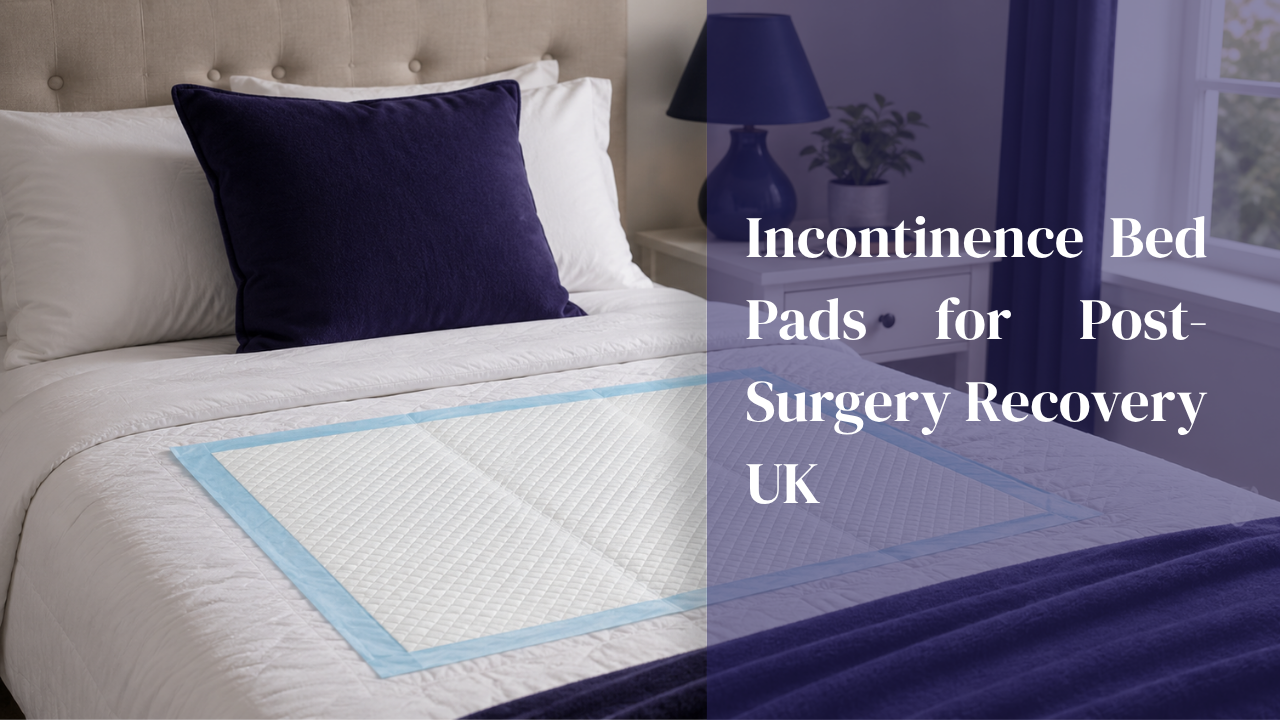
Disposable incontinence bed pads are one of the most practical items to have at home during post-surgery recovery in the UK — not because every surgical patient experiences incontinence, but because temporary bladder control changes after certain operations are genuinely common, and being unprepared makes an already demanding recovery considerably harder.
This guide is written for anyone preparing for or recovering from surgery in the UK — hip replacements, hysterectomies, prostate surgery, spinal procedures, abdominal operations, and caesarean sections are among the procedures most commonly associated with temporary post-operative bladder changes. It covers what to expect, what products actually help, how to set up your bed and bedroom for recovery, and how to access VAT relief on incontinence products during your recuperation period.
Why Surgery Affects Bladder Control
Temporary incontinence after surgery is more common than most patients are told in advance. The causes vary depending on the type of surgery, but the most frequent explanations include:
Anaesthesia effects. General anaesthesia temporarily suppresses the nerve signals that regulate bladder function. In the hours and days after surgery, the bladder can be overactive, underactive, or unpredictably difficult to control. This typically resolves within a few days but can persist for one to two weeks.
Pelvic floor disruption. Surgeries involving the pelvis, abdomen, or lower spine — including hysterectomy, prostatectomy, hip replacement, and caesarean section — can temporarily affect the pelvic floor muscles that support bladder control. The NHS guidance on pelvic floor exercises explains how these muscles work and how they recover after disruption.
Catheter removal. Many surgical patients have a urinary catheter fitted during the procedure. After catheter removal — which typically happens within 24 to 48 hours post-surgery — the bladder needs time to readjust. Urgency and leakage in this period is normal and expected.
Medication side effects. Post-operative painkillers, particularly opioids, reduce bladder sensitivity and can cause retention followed by overflow incontinence. Diuretics given to manage fluid balance can increase urinary frequency significantly.
None of these are permanent in most cases. But during the recovery period — which can range from two weeks to three months depending on the surgery — protection is needed.
What You Need at Home Before You’re Discharged
The time to prepare is before the operation, not after. Being discharged home from a UK hospital after surgery typically happens faster than most patients expect — often within 24 to 48 hours for major procedures. Having the right supplies already in place means one less problem to solve when you’re tired and in recovery.
The essential list for post-surgery recovery at home includes:
A supply of disposable incontinence bed pads placed on your bed before you return home. The 60x90cm size is recommended for post-surgical use because it provides full sleeping area coverage regardless of the surgical site. Place the pad directly on the fitted sheet before putting on any additional bedding. This means if there is a leak overnight, only the pad needs replacing — not the full sheet and duvet.
A second pad placed on whatever chair or sofa you’ll be resting on during the day. Daytime rest is a significant part of post-surgical recovery, and being seated for extended periods carries similar protection needs to overnight.
A small supply of the 60x60cm pads for chair and seated use. These are more economical for daytime use where full bed coverage isn’t needed, and their 60x60cm footprint fits most UK armchairs comfortably.
The Right Pack Size for Post-Surgery Recovery
Post-surgical incontinence is temporary for most patients, but the duration varies. Having enough supply on hand without over-ordering is a balance worth thinking about.
For a two-week post-operative period using one overnight pad and one daytime pad daily, a pack of 30 (£8.99) covers the overnight needs and a pack of the 60x60cm 50-pad pack covers daytime seating. For a longer four to six week recovery, the pack of 50 60x90cm pads at £12.99 is a more practical choice.
For procedures with longer anticipated recovery times — major spinal surgery, radical prostatectomy, abdominal hysterectomy — starting with a pack of 100 at £20.00 avoids the inconvenience of reordering during recovery, when mobility and energy are limited.
Setting Up Your Bedroom for Post-Surgery Recovery
The way you set up your sleeping environment before surgery makes a measurable difference to how manageable the recovery is. These are the practical steps worth taking:
Layer the bed thoughtfully. Place your fitted sheet as normal. Place a TBM 60x90cm pad on top of the fitted sheet, positioned where your hips will be. Optionally place a thin cotton blanket or light throw over the pad — this adds comfort without reducing the pad’s function. Then place your normal duvet on top. If a leak occurs, you remove the duvet, dispose of the pad, and replace it — without needing to strip and remake the full bed.
Keep a spare pad on the bedside table. Reaching for a fresh pad in the night should require no more effort than rolling slightly and reaching to the side. Keeping three or four pads on the bedside table means no searching or bending during what can be a disorienting middle-of-the-night pad change.
Have a small bin with a lid within arm’s reach. Disposing of used pads hygienically without getting out of bed is important during the immediate post-operative period when mobility is restricted. A small pedal bin positioned beside the bed solves this.
Protect the mattress below the pad. While TBM bed pads have a fully waterproof PE film base that prevents liquid reaching the mattress, adding a mattress protector beneath the fitted sheet provides complete belt-and-braces protection for the recovery period. This is particularly worth doing if your mattress is expensive or memory foam.
Post-Surgery Recovery and Skin Health
Skin care during post-surgical recovery is important and often overlooked. After surgery, reduced mobility means patients may be lying or sitting in one position for longer periods than normal. Combined with post-operative sweating and any incontinence, this can create conditions for skin irritation or pressure soreness.
The dry-touch non-woven surface of TBM bed pads helps by wicking moisture away from the skin surface on contact rather than allowing it to pool against the skin. This is relevant both overnight and during extended daytime rest.
Changing pads promptly when they’re used is still the most important skin protection measure. The NHS guidance on preventing incontinence-associated dermatitis reinforces that keeping skin clean and dry is the primary preventive step.
For patients recovering from surgery who are also managing existing skin conditions, the NICE clinical guidance on surgical site care and skin integrity provides clinical-level reference for carers and healthcare visitors.
VAT Relief During Recovery — You Almost Certainly Qualify
This is the single most underused saving available to post-surgery patients buying incontinence products in the UK. Under UK VAT law, incontinence products are VAT exempt for people who are chronically ill or disabled. Post-surgical patients in a recovery period typically meet the eligibility criteria.
The saving is 20% off every order — automatically applied at checkout when you complete the online declaration. On a pack of 100 pads at £20.00, that is a £4.00 saving. No prescription or letter from your GP is required. Read our full VAT relief on incontinence products guide for complete information, or check the official criteria at GOV.UK’s VAT relief page for disabled customers.
What to Expect as Recovery Progresses
For most patients, post-operative bladder control improves steadily week by week. The pattern is typically:
Week 1–2: Most unpredictable. Bladder control is least reliable, catheter effects are still resolving, and mobility is lowest. Full overnight and daytime pad use is standard.
Week 2–4: Bladder control typically begins to improve. Many patients can manage with overnight pads only during this phase, or with lighter daytime protection.
Week 4–8: For most surgical procedures, continence is significantly improving by this stage. Pads may only be needed overnight or during specific activities.
Beyond 8 weeks: Most post-operative incontinence has resolved. If it hasn’t, the NHS incontinence treatment pathway outlines the next steps including pelvic floor physiotherapy and specialist referral.
If you’re supporting a family member through surgical recovery, our complete guide to elderly bedding protection at home covers the broader context of managing incontinence care at home with practical dignity.
B2B Supply for Post-Surgical and Rehabilitation Settings
For hospitals, rehabilitation centres, step-down units, and district nursing teams managing post-surgical patients at home, TBM offers B2B bulk supply with trade pricing and no minimum order. The TBM B2B supply programme is available to all registered UK healthcare providers. Contact info@tbmtrading.com or call +44 7351 161834 to discuss supply requirements.
Frequently Asked Questions
Do I need incontinence bed pads after surgery?
Temporary bladder control changes are common after many surgical procedures including hip replacement, hysterectomy, prostatectomy, caesarean section, and spinal surgery. Disposable bed pads provide protection during the recovery period — typically one to eight weeks — while normal bladder function returns. They are not always needed permanently.
What size bed pad is best for post-surgery recovery?
The 60x90cm pad is recommended for overnight post-surgery use as it provides full sleeping area coverage. For daytime chair and sofa use, the 60x60cm pad is a more economical choice for seated protection.
Can I claim VAT relief on incontinence pads during surgical recovery?
Yes, in most cases. Post-surgical patients who are temporarily disabled or managing a chronic illness qualify for VAT relief on incontinence products. VAT is removed at checkout automatically on TBM orders when you complete the online declaration.
How many bed pads will I need after surgery?
For a two-week recovery with one overnight pad and one daytime pad per day, a pack of 30 covers the overnight requirement and a pack of 50 (60x60cm) covers daytime seating. For a four to six week recovery, a pack of 100 (60x90cm) avoids reordering during a period when energy and mobility are limited.
How do I dispose of used incontinence pads after surgery?
Used disposable bed pads should be folded inward to contain the used surface, placed in a plastic bag, and disposed of in general household waste. They are not recyclable and should not be flushed. For clinical waste disposal in healthcare settings, follow your local NHS trust’s guidelines on incontinence product disposal.
TBM Trading supplies disposable bed pads across the UK with free delivery on all orders. Browse the full incontinence range or contact our team at info@tbmtrading.com | +44 7351 161834 for B2B supply enquiries.