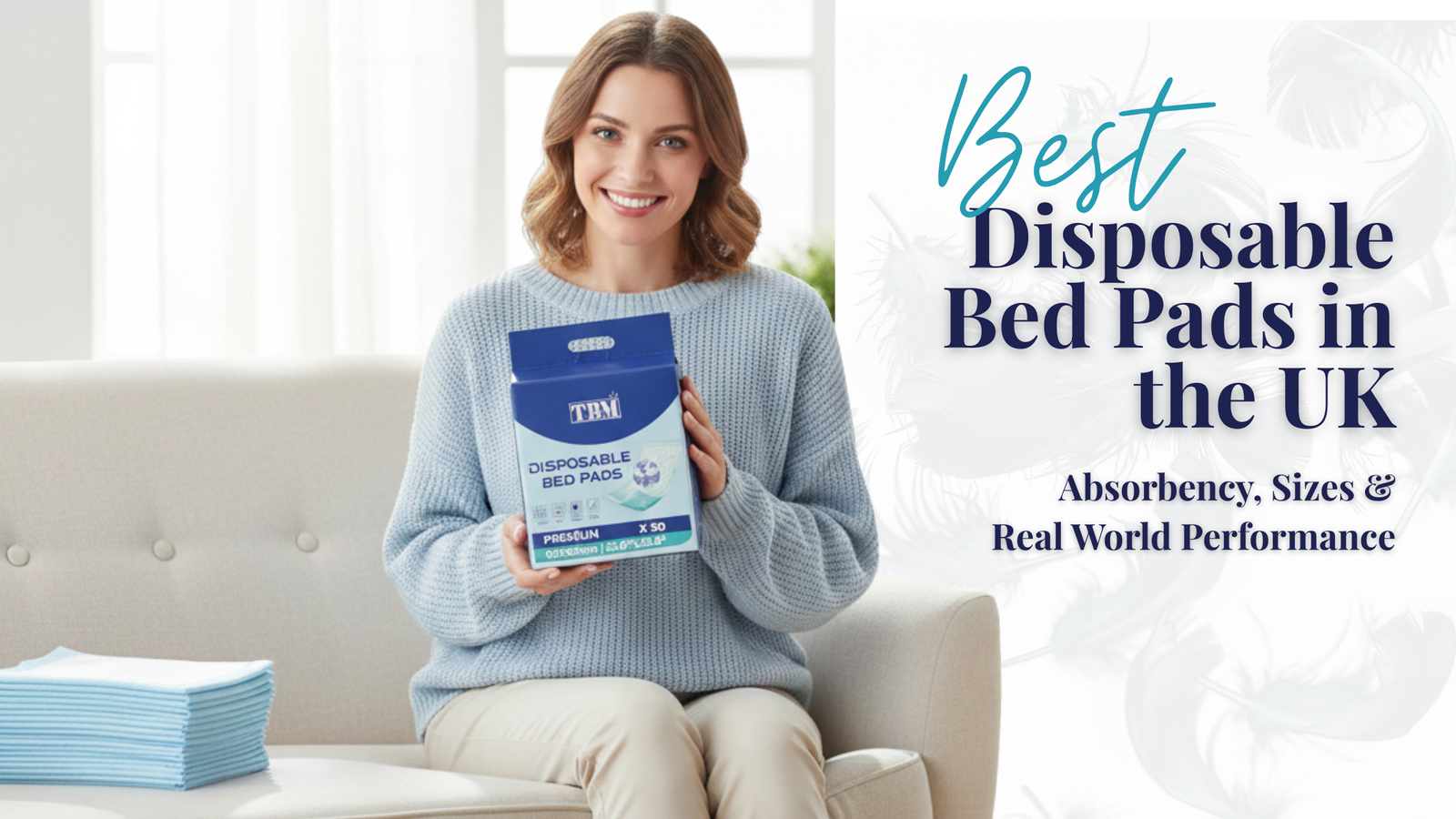
If you’re searching for the best disposable bed pads UK households and care providers rely on, the right choice depends on absorbency level, size, leak protection, and real-world durability. High-quality disposable bed pads UK consumers use today combine a soft top layer, super-absorbent core, and waterproof backing to protect mattresses effectively.
Single-use bed pads are widely used for elderly care, post-surgery recovery, childcare, and temporary incontinence management. They provide hygienic, quick-change protection and reduce laundry demands compared to reusable options. However, performance varies significantly depending on absorbency rating, pad size, and construction quality.
This guide provides a structured comparison of absorbency levels, sizing options, practical UK considerations, and when to combine single-use bed pads with mattress protectors for optimal results.
Quick Answer: Key Takeaways
-
The best disposable bed pads UK buyers choose offer 1000ml+ absorbency for overnight protection.
-
Common UK sizes include 60×60 cm, 60×90 cm, and 90×90 cm, with larger pads reducing edge leakage.
-
Disposable bed pads are ideal for short-term or high-hygiene settings.
-
Combining single-use bed pads with mattress protectors provides layered protection.
-
Non-slip backing and dermatologically tested top sheets improve safety and comfort.
What Are Disposable Bed Pads?
Disposable bed pads (also called underpads) are single-use absorbent sheets placed over bedding to protect against moisture damage.
They typically include:
-
A soft non-woven top sheet
-
An absorbent pulp or SAP core
-
A waterproof polyethylene backing
Unlike full mattress protectors, disposable bed pads protect a specific surface area and are designed for quick disposal after use.
For broader mattress coverage, see our guide on How to choose the right mattress protectors for UK homes.
What Makes the Best Disposable Bed Pads in the UK?
1. Absorbency Level
Absorbency determines how much liquid a pad can contain before leakage occurs.
| Usage Type | Recommended Absorbency | Suitable For |
|---|---|---|
| Light | 600–900 ml | Short-term or daytime use |
| Moderate | 1000–1500 ml | Overnight elderly care |
| Heavy | 1500 ml+ | Medical or high-dependency care |
For medical guidance on managing incontinence, refer to NHS guidance on urinary incontinence from the National Health Service.
2. Size and Coverage
Choosing the correct size reduces the risk of edge leakage.
| Size | Best For |
|---|---|
| 60×60 cm | Chairs or small beds |
| 60×90 cm | Single beds |
| 90×60 cm | Wider single/double coverage |
| 90×90 cm | Active sleepers |
Larger pads are often recommended in care settings where repositioning is frequent.
3. Real-World Performance Factors
When evaluating disposable bed pads UK suppliers offer, consider:
-
Even distribution of absorbent material
-
Tear-resistant waterproof backing
-
Non-slip positioning
-
Odour control features
-
Skin-safe, fragrance-free materials
For elderly users, Age UK’s advice on managing incontinence from Age UK provides additional practical guidance.
Disposable Bed Pads vs Mattress Protectors
| Feature | Disposable Bed Pads | Mattress Protectors |
|---|---|---|
| Reusable | No | Yes |
| Hygiene | High (single-use) | Requires washing |
| Coverage | Partial surface | Full mattress |
| Best For | Temporary use | Long-term protection |
If you’re comparing long-term value, read our Reusable vs disposable bed pads cost comparison guide.
Many UK households combine disposable bed pads with mattress protectors for layered security.
Are Disposable Bed Pads Suitable for Elderly Care?
Yes. They are commonly used in:
-
Home care environments
-
Residential care homes
-
Post-surgery recovery
-
Temporary illness management
UK care providers must follow infection control procedures. You can review infection prevention and control guidance from NHS England for compliance standards.
For carers supporting relatives at home, see our resource on Managing incontinence at home in the UK.
Environmental Considerations in the UK
Most disposable bed pads contain plastic backing and are not recyclable through standard kerbside systems.
Proper disposal should follow UK household waste disposal guidance from GOV.UK.
To reduce environmental impact:
-
Use disposables only when necessary
-
Pair with reusable mattress protectors
-
Buy in bulk to reduce packaging waste
You may also review relevant product quality benchmarks from the British Standards Institution when assessing healthcare-grade products.
How Many Disposable Bed Pads Are Needed Per Week?
Usage varies:
-
Light use: 1–2 per day
-
Moderate use: 2–3 per day
-
High-dependency care: 3–5 per day
If purchasing regularly, explore Bulk buying disposable bed pads UK options to improve cost efficiency.
Care providers may also benefit from our Care home hygiene essentials checklist for operational planning.
Considerations for UK Climate and Households
The UK’s damp climate can extend drying times for washable bedding, particularly in winter. Disposable bed pads provide a practical alternative during colder months when laundry turnaround is slower.
In shared accommodation or rental properties, disposable pads reduce the risk of permanent mattress staining and associated replacement costs.
Frequently Asked Questions
1. What are the best disposable bed pads UK buyers choose for overnight use?
Pads with at least 1000–1500 ml absorbency and a waterproof backing are typically recommended. Larger sizes such as 60×90 cm or 90×90 cm provide better coverage for movement during sleep.
2. Are disposable bed pads suitable for elderly users?
Yes. They are commonly used in both home and care environments for short-term and ongoing support. Skin-friendly materials and proper absorbency selection are essential for comfort.
3. Can disposable bed pads prevent mattress damage?
When used correctly, the waterproof backing prevents liquid penetration, protecting mattresses from staining, odours, and structural degradation.
4. What size is best for a single bed?
A 60×90 cm pad is generally suitable. Larger options provide improved coverage for active sleepers.
5. Are disposable bed pads cost-effective?
They are cost-effective for short-term use. For ongoing needs, combining disposable bed pads with reusable mattress protectors may reduce overall long-term costs.
Need Help Choosing the Right Disposable Bed Pads?
Selecting the best disposable bed pads UK households require depends on absorbency needs, frequency of use, and bedding size. Structured comparisons and expert guidance can prevent overbuying or under-protection.
If you’re evaluating options for home care or professional use, review your absorbency requirements carefully and consider layered protection strategies for maximum reliability.