
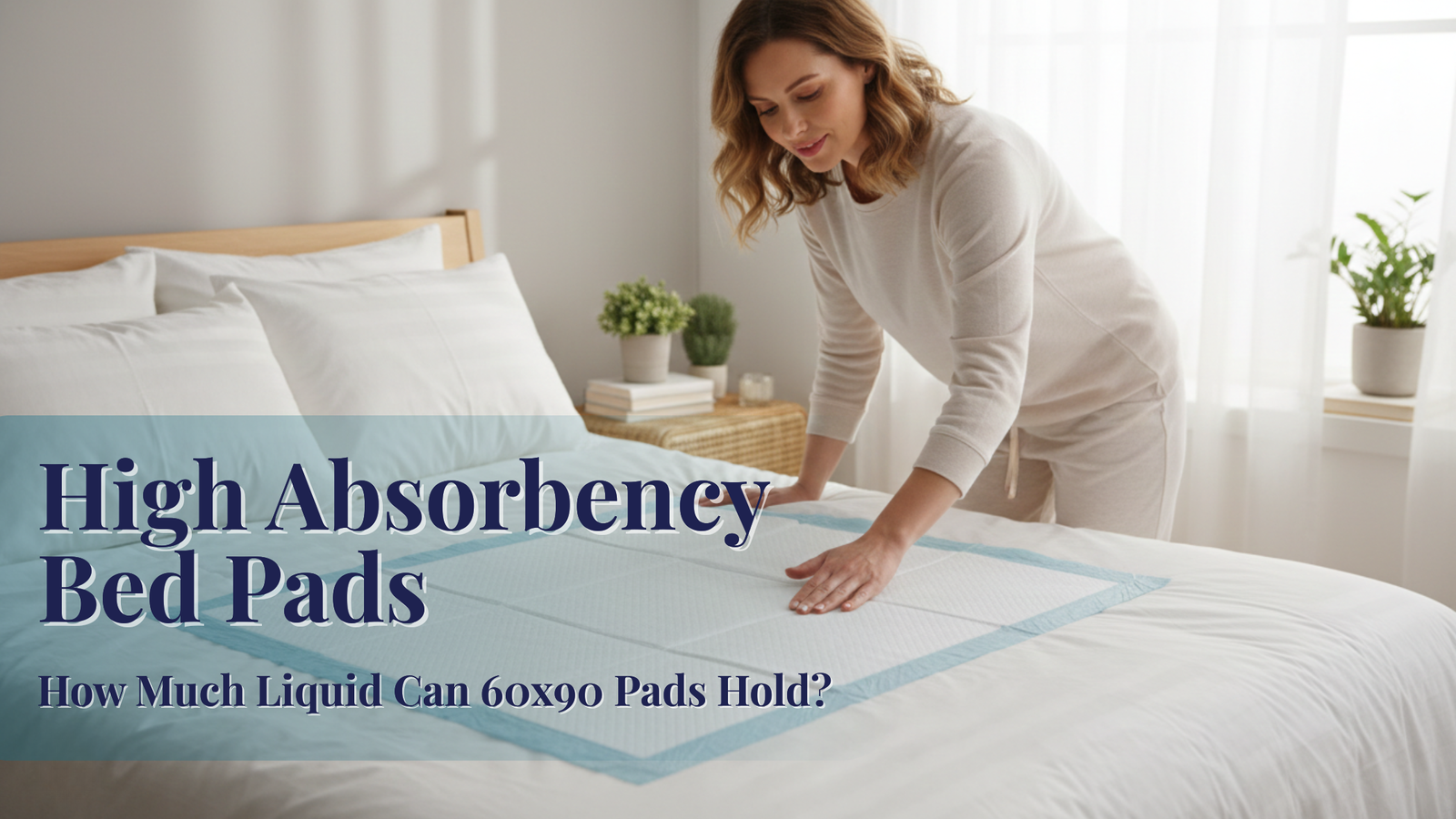
If you are researching 60×90 bed pads capacity, most high absorbency 60×90 cm bed pads available in the UK hold between 1000 ml and 2000 ml, depending on core construction and polymer concentration. Pads with a high-grade polymer core typically offer higher retention and stronger leak protection than pulp-only alternatives.
High absorbency bed pads are widely used across UK households, care homes, and recovery settings. However, actual performance depends on pressure distribution, body movement, and absorption speed — not just the laboratory-tested rating printed on the packaging.
This guide explains real-world 60×90 bed pads capacity, how polymer core technology works, how this size compares to others, and what UK buyers should evaluate before purchasing.
Quick Answer: 60×90 Bed Pads Capacity
- Standard 60×90 bed pads typically hold 1000–1500 ml.
- Premium high absorbency bed pads with polymer core technology may hold up to 2000 ml.
- Real-world usable capacity is slightly lower than maximum lab test figures.
- 60×90 cm is the most commonly used size for single beds in the UK.
- Higher absorbency ratings reduce overnight change frequency.
What Is the Actual Capacity of 60×90 Bed Pads?
Manufacturers test absorbency under controlled laboratory conditions. In real use, performance is influenced by:
- Even distribution of liquid
- User weight and pressure points
- Speed of absorption
- Positioning on the mattress
Care professionals often select pads rated at least 1200 ml for reliable overnight protection.
For medical context on continence care, refer to the National Health Service.
How Does a Polymer Core Improve Absorbency?
High absorbency bed pads use super absorbent polymer (SAP) technology. This polymer converts liquid into gel, improving containment and dryness.
Benefits of a polymer core include:
- Faster liquid lock-in
- Reduced surface wetness
- Improved odour control
- Stronger leak protection
For additional continence management advice, see guidance from Age UK.
If you want a deeper technical breakdown, read our internal guide on how polymer core bed pads work.
Absorbency Comparison Table (UK Market)
|
Pad Type |
Typical Capacity |
Best Use |
Leak Protection |
|
Pulp-only core |
600–1000 ml |
Light use |
Moderate |
|
SAP blend core |
1000–1500 ml |
Overnight |
High |
|
Premium polymer core |
1500–2000 ml |
Heavy use |
Very High |
Higher-capacity pads are often selected in line with infection control procedures recommended by NHS England.
For full purchasing advice, see our complete guide to high absorbency bed pads in the UK.
Why 60×90 cm Is the Most Popular UK Size
The 60×90 cm dimension provides:
- Coverage across the mattress width
- Improved containment for movement
- Suitable fit for single beds
- Balanced cost-to-coverage ratio
Smaller pads (60×60 cm) are common for chairs, while larger 90×90 cm pads are preferred for double beds.
Compare options in our bed pad size guide for UK buyers.
For added protection, explore waterproof mattress protectors for layered defence.
Cost Considerations in the UK
Typical retail ranges:
- Basic pads: £0.20–£0.35 per pad
- Standard SAP pads: £0.35–£0.60 per pad
- Premium polymer core pads: £0.60–£1.00 per pad
While premium pads cost more per unit, they may reduce total daily usage.
Product quality may align with relevant standards from the British Standards Institution.
If purchasing in volume, review our bulk buying guide for UK care homes and businesses.
Pros and Cons of 60×90 High Absorbency Bed Pads
Advantages
- Strong leak protection
- Suitable for overnight use
- Reduced laundry burden
- Hygienic single-use solution
Limitations
- Ongoing disposal cost
- Environmental considerations
- Disposal must follow guidance from GOV.UK
Considerations for UK Homeowners
The UK climate, particularly during winter, can slow laundry drying times. High absorbency disposable pads provide reliable protection when quick turnaround is needed.
In rental properties or shared accommodation, they help prevent mattress staining and reduce replacement costs. For ongoing use, pairing disposable pads with a mattress protector improves long-term durability.
For household planning, see our incontinence management at home UK guide.
Frequently Asked Questions
1. How much liquid can a 60×90 bed pad hold?
Most 60×90 bed pads hold between 1000 ml and 1500 ml. Premium polymer core options may hold up to 2000 ml under lab conditions, though real-world performance varies.
2. Are polymer core pads better than pulp-only pads?
Yes. Polymer cores improve absorption speed and reduce pooling, offering stronger leak protection for overnight or heavy use.
3. Is 60×90 large enough for overnight use?
For most single beds, yes. Absorbency rating is more important than size alone for overnight protection.
4. How many 60×90 pads are needed per day?
Light use may require 1–2 pads per day. Moderate to heavy use may require 2–4, depending on absorbency capacity.
5. Are these pads suitable for UK care homes?
Yes. They are commonly used in care environments where hygiene and rapid change capability are priorities.
6. Do higher capacity pads reduce overall cost?
In many cases, yes. Higher absorbency may reduce change frequency, lowering total daily consumption.
Need Guidance on 60×90 Bed Pads Capacity?
Understanding 60×90 bed pads capacity helps ensure you choose the correct absorbency level for your needs. Evaluate polymer core strength, leak protection features, and expected daily usage before purchasing.
For expert advice and product comparisons tailored to UK buyers, visit https://tbmtrading.com/ to review specifications or request further guidance.